A guide to...
Reading your meters & bills
Reading your meters regularly is important as you can keep track of how much you are spending on energy and ensure your bills aren’t based on estimated usage. We can help you to understand what type of meter you have and how to read it, as well as understand the important information on your fuel bills.
How to read your meters
There are four main types of meters; standard meters, dial meters, digital meters and smart meters. These may record either gas or electricity usage. You can tell which it is measuring as electricity meters are marked kilowatt hours (kWh) whereas gas meters are marked either cubic feet (ft³) or cubic metres (m³).
You may also have fuel gauges for oil or other liquid fuels. However, this leaflet covers only gas and electricity meters. For advice on reading other types of meters and gauges, please call our Freephone advice line on 0800 500 3076.
Types of meters
Standard meters
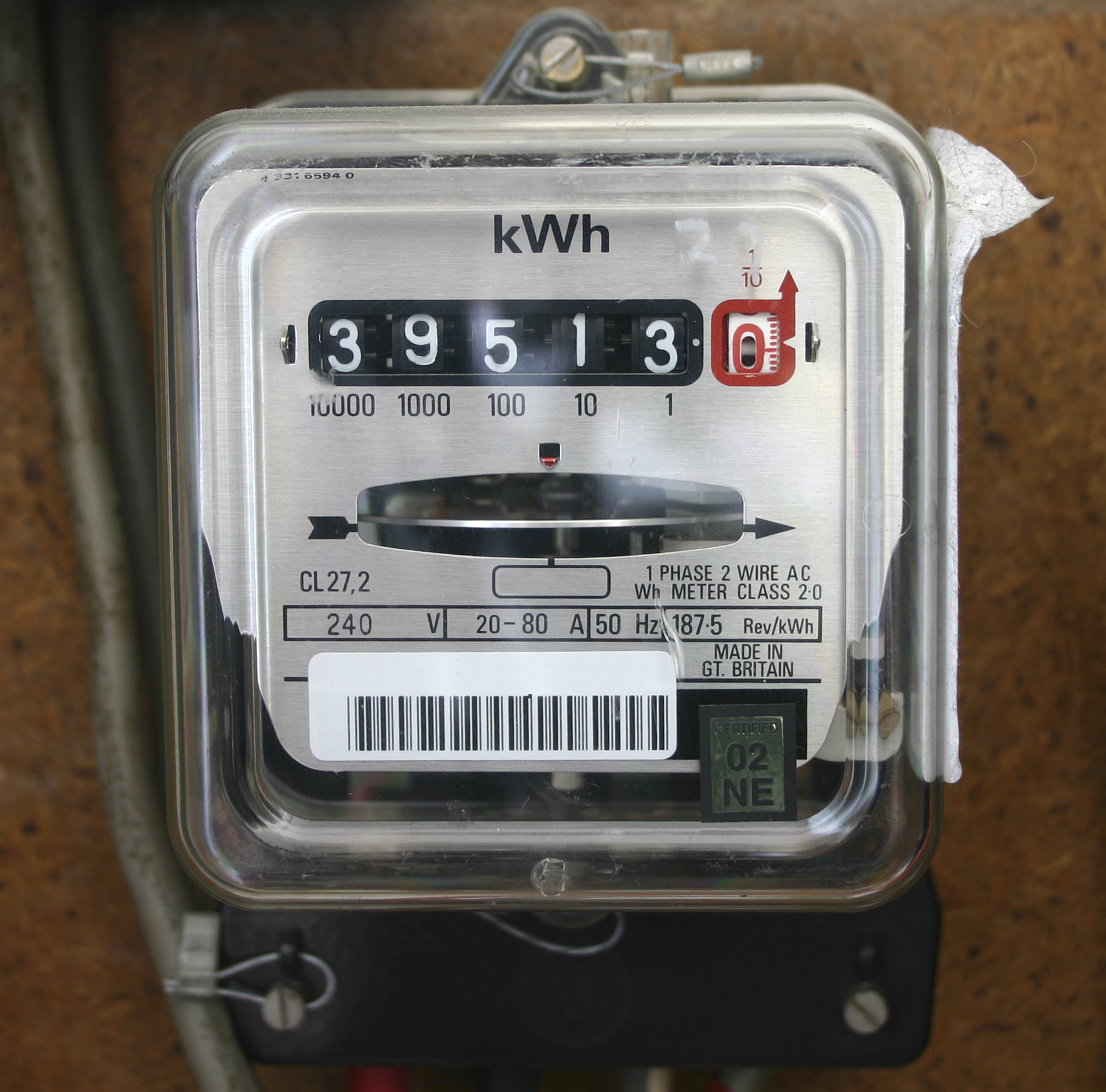
The numbers on a standard meter rotate in order to display the meter reading.
Simply read the whole row of digits from left to right, including any zeros at the beginning, to make sure you have the full reading. If there are additional numbers on the end coloured red or displayed as a red dial, do not record them; they show fractions of units and are for test purposes only.
When reading any type of gas or electricity meter you always round down.

Digital meters
With a digital meter, the meter reading is displayed on a digital screen. They can sometimes display other information as well as the meter reading and, if this is the case, you usually press a button to scroll through the various options.
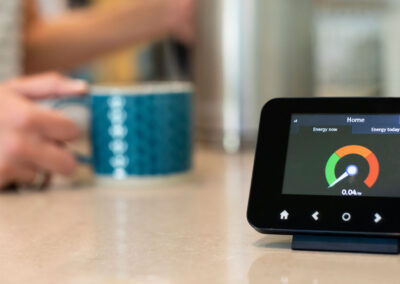
Smart meters are currently being installed in many homes with the aim of all homes having smart meters by 2020. They are a special type of digital meter that send your meter readings directly to the energy company, meaning you will no longer have to take manual readings. They usually send information to a separate in-home display as well. This will show additional useful information including up to date consumption and cost data and comparisons of current and past consumption.
Dial meters
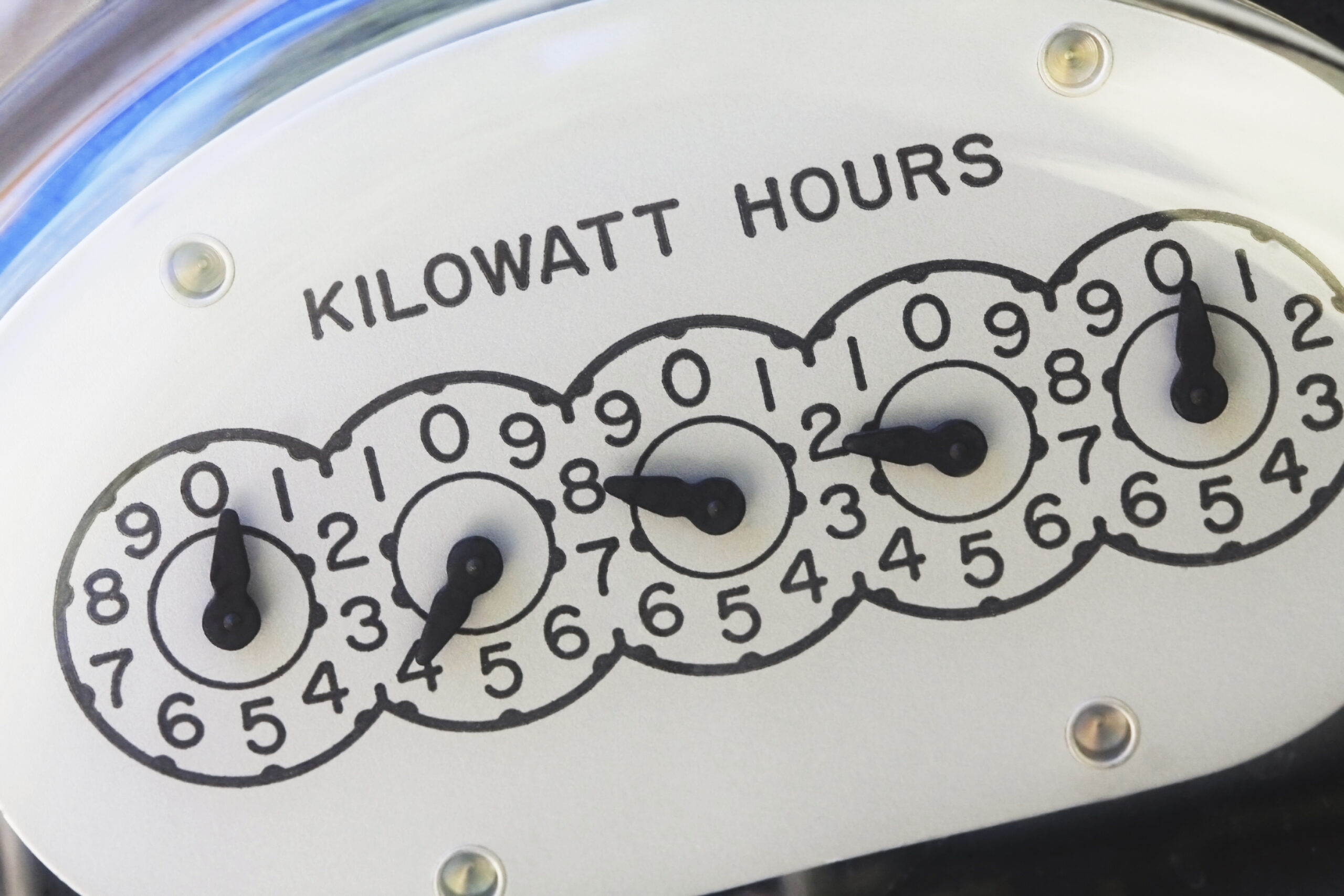
Dial meters are a little more difficult to read. They have a sequence of dials. The pointers on each dial rotate from 0 to 9. However, the pointers rotate clockwise and anticlockwise alternately so be careful when you read them! Read each dial, from left to right. Again, don’t record the number on any red dials as these display fractions of a unit. Remember always round down. So if, for example, the pointer is between 2 and 3, record 2 even if the pointer is closer to 3.
If the pointer is directly over the number, look at the next dial to see if it has passed 0. If it has, write down the number the pointer is over. If the pointer has not passed 0 it is the lower number that you note.
For example, in the picture below the pointer on the second dial is directly over the 4. The next dial (on 8) has not yet reached the 0 and so we record the lower number (3).
If we look to the next dial, we can see that the pointer (on 2) has gone past the 0. Therefore, the previous dial should be recorded as 8 (rather than being rounded down to 7).
Think of it like a clock; if the hour hand points at 3 and the minute hand is past 12, it is just after 3 o’clock. If the hour hand points at 3 but the minute hand is not at 12 yet, it isn’t quite 3 o’clock.


Day/night rate meters
Day/night rate electricity meters are also known as economy 7 meters.
It may be that you are charged a different rate for your day and night time electricity use. If so, you will be charged a lower rate during the night. These tariffs are sometimes referred to as economy 7 or economy 10 tariffs (because you get 7 or 10 hours of electricity at the cheaper rate). If this is the case, your electricity meter will record two figures; one for daytime (or peak rate) usage and one for night time (or off-peak) usage. These may be marked day-night, high-low or peak-off peak. You should record both numbers. Make sure you record which is which.
If you have a day / night meter with a digital display, it may only display one reading at a time and you may have to scroll through the different readings to get to the one you want (it may also show a combined reading). The daytime reading is usually displayed as rate 1 and the night-time reading as rate 2. However, this can vary so if you are in any doubt please consult the user manual or contact your energy supplier to check.
Prepayment energy meters
To use a prepayment meter, you need to go to an outlet to add credit to your card or key. This is then inserted into the front of your prepayment meter. The display window on the front of the meter can show a range of information including:
- Units of energy consumed
- Any fixed charge the energy supplier charges
- The rate per unit of fuel
- The amount of credit inserted
- Current credit remaining
- Any outstanding debt
- Any debt repayments
- Emergency credit
You usually press a button to scroll through these options. When the energy meter completely runs out of credit, the gas or electricity supply automatically stops. However, a small amount of emergency credit will be available. This should give you time to top up before this happens.

Understanding bills
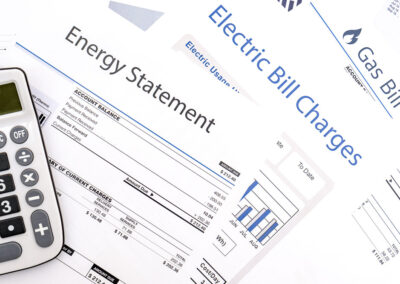
With bills containing so much jargon, it is little wonder that a third of people in the UK have difficulty understanding their energy bills. This leaflet will help to ensure that you are not one of them. The first thing most people look for is the total amount they have been charged. This will usually consist of three main elements:
- The cost of the energy itself. You are charged for each unit (kilowatt hour; kWh) of energy you use.
- A standing charge. This is a fixed amount that covers the cost of providing the infrastructure required to supply your energy.
- VAT on electricity and gas is charged at 5%. However, if you delve a bit deeper there are some other key things to look out for.
Current balance
This shows whether you are currently in credit (CR) or debit (DR). You are usually in credit or debit if you pay by monthly direct debit as the energy company splits your payments equally across the year. This means that in the summer your payments
are likely to be more than you actually owe (and you are more likely to be in credit) and vice versa in winter.
The only time you really need to worry is if the level of credit or debit becomes particularly large. In this case, you should contact the energy company and ask them to adjust your monthly direct debit amount.
Your current tariff
Your bill should also show which tariff you are currently on. This will become important if you wish to switch tariff or supplier (see section on switching). It should give details of how much you are paying per unit of energy (measured in kilowatt hours; kWh) and your standing charge.
If you are on a fixed tariff, it should also tell you when the fixed period comes to an end and any exit fees payable should you switch tariff before this date.
Your bill may also show if there are cheaper tariffs available but be aware that this will only show cheaper tariffs from this supplier and you may find a better deal by comparing across all energy companies.
Gas specific information
On a gas bill, there will also be a section showing how your bill is calculated. This is because the amount of gas you use is measured in cubic feet (ft³) or cubic metres (m³) but you are billed per kWh. The calculation shows how they have converted from the volume used to kWh. It is not necessary for you to understand this calculation in order to understand your bill. It will also show whether your consumption is measured in cubic feet (ft³, sometimes stated as CUFT) or cubic metres (m³). It is worth checking against your meter (where it will also be stated) to check that this is correct.
Additional useful information
Your bills may also contain a host of other useful information. One of the most useful is an estimation of your annual consumption should you have not been with the company for a full year. This is often called your personal projection. If you have been with the company for over a year, they should state your actual annual consumption. These figures can be used in order to carry out an accurate comparison should you wish to switch tariff.
Switching your tariff / provider
If you have not switched for some time, it is likely that you can make significant savings on your energy bills by switching tariff.
We have our own switching tool powered by energyhelpline which can be found at ukpower.co.uk/wl/warm-and-well. In addition, we offer a phone transfer service for switching – give us a call on our Freephone advice line – 0800 500 3076.
If you use our services you will generate a small commission for us that will fund more work to support vulnerable householders reduce their energy costs.
There are also other switching websites available. If you use one of these, choose one that has been approved by the energy regulator, Ofgem. They guarantee that These sites are independent, and the options and prices you find on them will be calculated and displayed in a fair and unbiased way. You can find the full list of Ofgem approved sites at: goenergyshopping.co.uk/energytariffs-and-deals/comparison-sites
You can usually perform a comparison based on the size of your house and number of occupants from which an estimate of your annual consumption will be calculated. However, you will get a much more accurate comparison if you are able to input your annual consumption.
Once you have found the cheapest tariff, you can usually switch directly via the website. However, you may want to ring the new supplier directly if you have any questions or want to find out a bit more.
It is also worth bearing in mind that there are lots of different types of tariffs and this may help determine which is best for you (this may not always be the cheapest). For more detailed information on switching, see our separate leaflet dedicated to switching tariffs.
- Gas older (non-condensing)
- Fixed tariff
- Duel fuel tariff
- Online tariffs
- Pre-payment tariffs
- Economy 7/10 tariff
- ‘Green’ tariffs
What is it?
Variable prices that go up and down with the market.
A good option if…
You want flexibility and don’t want to be tied down to acontract.
Bear in mind…
Not usually the cheapest and may rise.
What is it?
Unit rates and standing charge fixed for a set period of time.
A good option if…
You want peace of mind.
Bear in mind…
You will not benefit from any price cuts whilst you are on a fixed tariff. There may be an exit fee if you leave before the fixed period ends, although if you switch up to 42 days before the end of your tariff your supplier cannot charge exit fees
What is it?
Gas and electricity from the same energy supplier (usually at a discount).
A good option if…
You want the convenience of just dealing with one supplier.
Bear in mind…
The amount of discount dual fuel offers does not always outweigh the potential savings of going with two separate suppliers for gas and electricity.
What is it?
Requires you to manage your account via the internet, usually in return for a discount. You will be asked to send meter readings online and will receive ‘paperless’ bills.
A good option if…
You want the cheapest possible tariff and you prefer managing everything via the internet.
Bear in mind…
If you opt for an online tariff, many suppliers will send all important correspondence via email rather than through the post. If you prefer paper bills, an online tariff may not be for you.
What is it?
For people with prepayment meters. Enables customers to pay in advance or gas and electricity by ‘topping-up’ their meter using prepay tokens, cards or a key.
A good option if…
Some people find prepayment meters an easier way to manage their finances.
Bear in mind…
Prepayment is widely accepted to be one of the most expensive ways to pay for gas and electricity. Also, tariff options are more limited for prepayment customers.
What is it?
Offer electricity at a cheaper rate during the night.
A good option if…
You have night storage heaters or high night-time consumption for other reasons.
Bear in mind…
If you don’t have very high nighttime usage these tariffs are likely to work out more expensive.
What is it?
Either the supplier will promise to match your usage with generation from renewable sources of energy, or it will contribute towards environmental chemes on your behalf.
A good option if…
You are concerned about the environmental impact of your gas and electricity use.
Bear in mind…
Many, but not all, green tariffs charge higher than average prices.
More advice
Our advisers are on hand to answer any questions you may have, and may also be able to offer you a free home visit to provide in-depth advice specific to your property and needs. Give us a call on 0800 500 3076 for more information.